GMA T.33 and others. Photo Credit: CarScoops
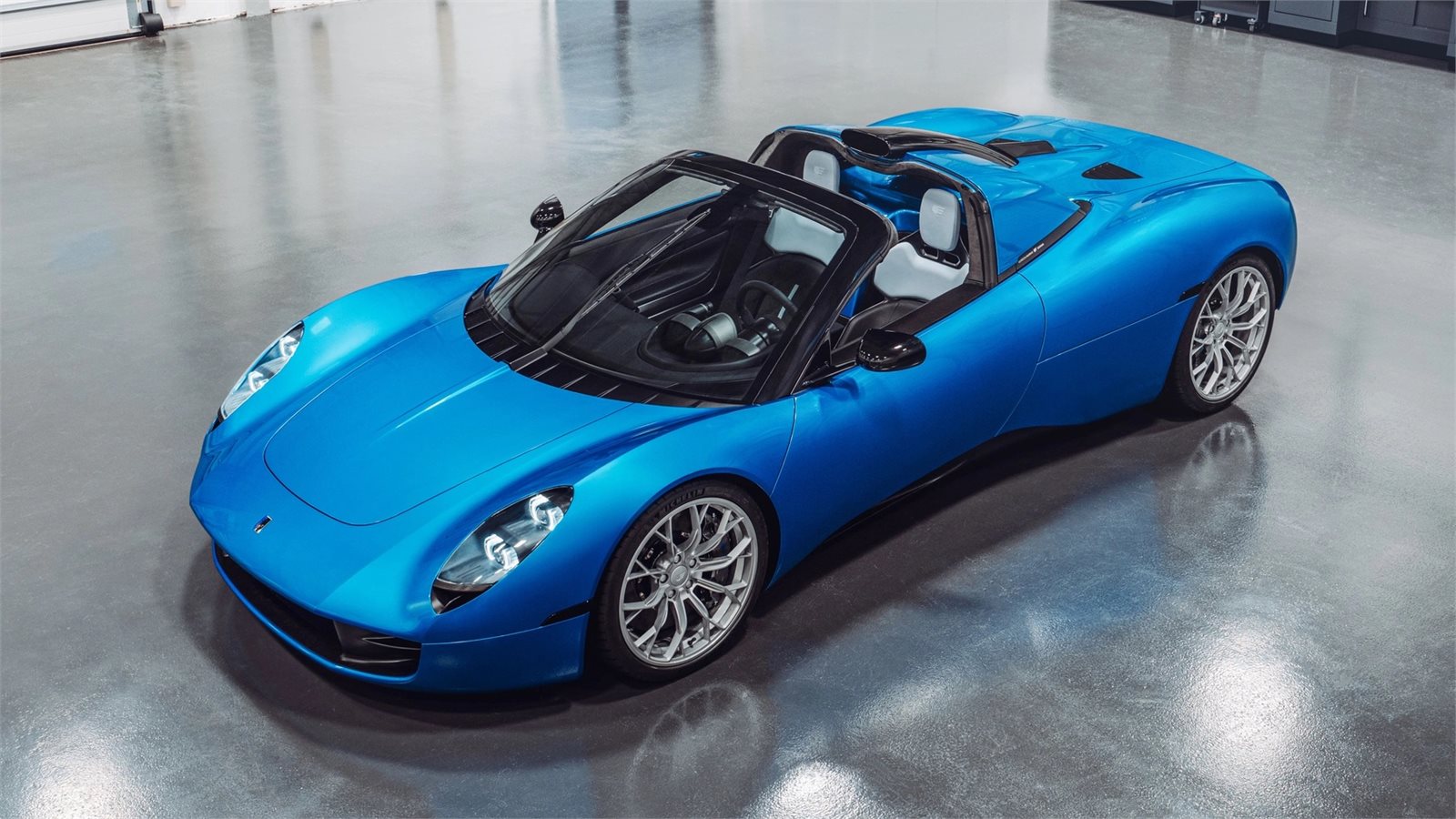 GMA T.33 Spider. Photo Credit: Top Gear, BBC
Nearly 30 years after production ended on Gordon Murray’s most famed effort, the legendary McLaren F1, and 43 months after the production debut of his next road-going venture, the T.50, Gordon Murray Automotive has begun deliveries of the newest entry in their brand of F1 homages. Called the T.33 Spider, it aims to distill the flagship T.50’s screaming Cosworth V12 engine & analogue roots into a more usable, open-top supercar. Despite the deletion of the famous Brabham BT46B-inspired rear-fan in favor of road-legality and luggage space, GMA’s new baby supercar still delivers the same ethos as its bigger brother: the lightest, simplest, and most connected toy in a DCT-only and increasingly hybridized segment. As delivery spyshots make their rounds on forums and carspotter instagrams alike, we thought it would be a good time to go over GMA’s backstory and what makes the T.33 such a special entry in the modern supercar world.
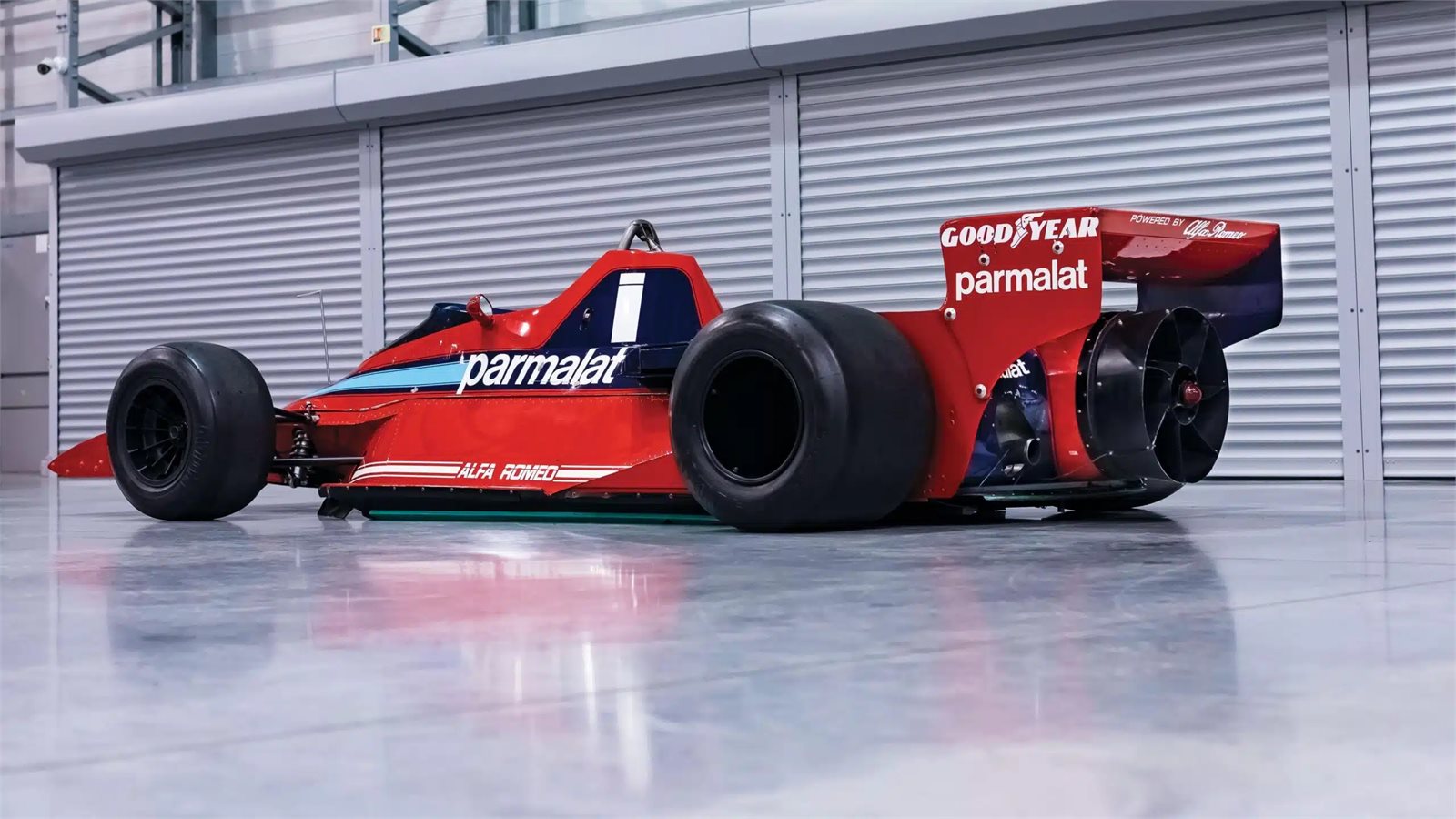 Brabham BT46B. Photo Credit: Motor Sport Magazine
While the South African designer is best known for his work on the ‘92 McLaren F1, his work first garnered the automotive world’s attention in the form of the Brabham BT46B, most widely known as the “fan car” for its downforce-generating rear-mounted fan. While it only competed once in this configuration in the 1978 Formula 1 season, it took a rather commanding victory in what would be its only race at the hands of Niki Lauda. So effective was Murray’s design that the BT46B broke the F1 lap record at the Anderstorp Scandinavian Raceway where its debut took place, a record that still holds to this day. Despite such a short lifespan as the “fan car”, the BT46B quickly rose to fame for its innovative design and unorthodox technologies. Murray’s exotic design-thinking would return in the ‘90s to deliver the work that would define his career, and later in the 2020s when the “fan car” would make a refreshed appearance.
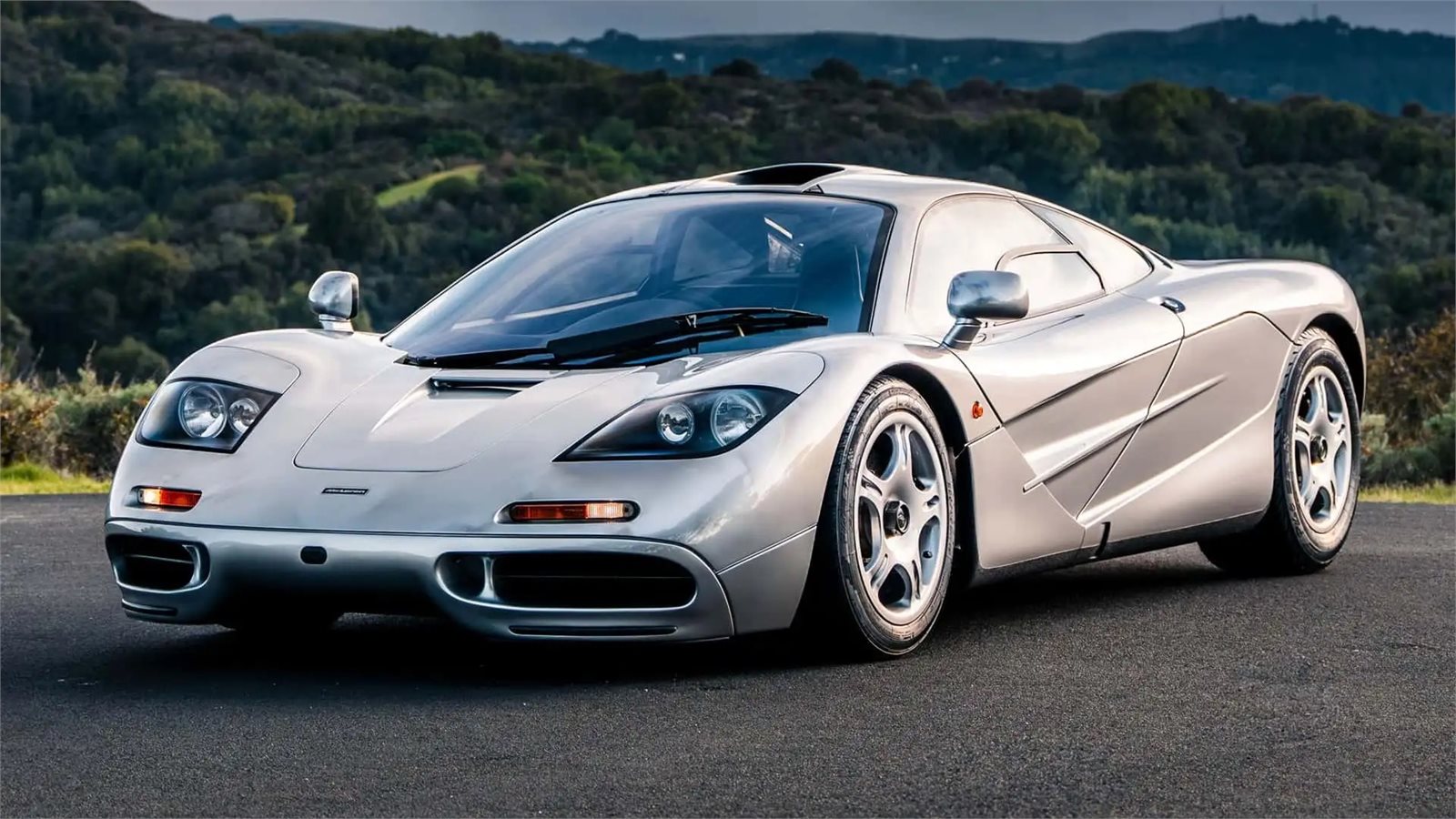 McLaren F1. Photo Credit: Motor1
The McLaren F1 road car arrived in 1992 as a celebration of the Woking team’s successes in Formula One, having won 16 world championships up to that point (9 drivers titles and 7 constructors titles). In fact, the F1 arrived on public roads right after McLaren’s most dominant period in F1 to date, having concluded the legendary Senna/Prost era and four consecutive constructors titles. It was exactly this pedigree that Gordon Murray aimed to channel, building the “ultimate road car”. By the end of the F1’s production run in 1998, it was clear that Murray had done exactly that: not only was the F1 the world’s fastest production car from 1993 to 2005 (and still holds that title for naturally aspirated engines), but was also an absolute race-bred driver’s car. The F1 was the last road-legal, series produced sports car to win the 24hr of Le Mans outright, and was so uniquely driver-focused, center-seat and all, that Autocar stated in a road test, "The McLaren F1 is the finest driving machine yet built for the public road" and that, "The F1 will be remembered as one of the great events in the history of the car, and it may possibly be the fastest production road car the world will ever see." High praise, especially at a time when cars like the Ferrari F40 and Porsche 959 were barely turning five years old. The immediate and long-lasting success of the F1 road car not only poised McLaren for a return to the road-legal automotive world a decade later, but also catapulted Gordon Murray’s stock as a designer and engineer, having created a landmark that would arguably become the most significant supercar of the 1990s.
 GMA T.50. Photo Credit: Top Gear, BBC
Fast-forward about 30 years and Gordon Murray is back in the spotlight. After debuting the new Gordon Murray Automotive brand with the T.50 halo car in 2022, sporting the same high-revving V12, manual rear-drive configuration, and center-seating position as the F1, GMA has made a name for themselves as some of the last truly analogue supercar makers. Praised for its simplicity, lightness, and tactility-above-all ethos, the T.50 garnered near-universal rapture from every publication it graced, with reviewers gleaming over its lack of power steering at speed, extraordinary lack of weight, and screaming 12,100 rpm Cosworth engine (the highest-revving road-car engine of all time). With such positive reception, GMA knew they had a winning formula on their hand, and began devising more flavors of the McLaren F1’s spiritual successors.
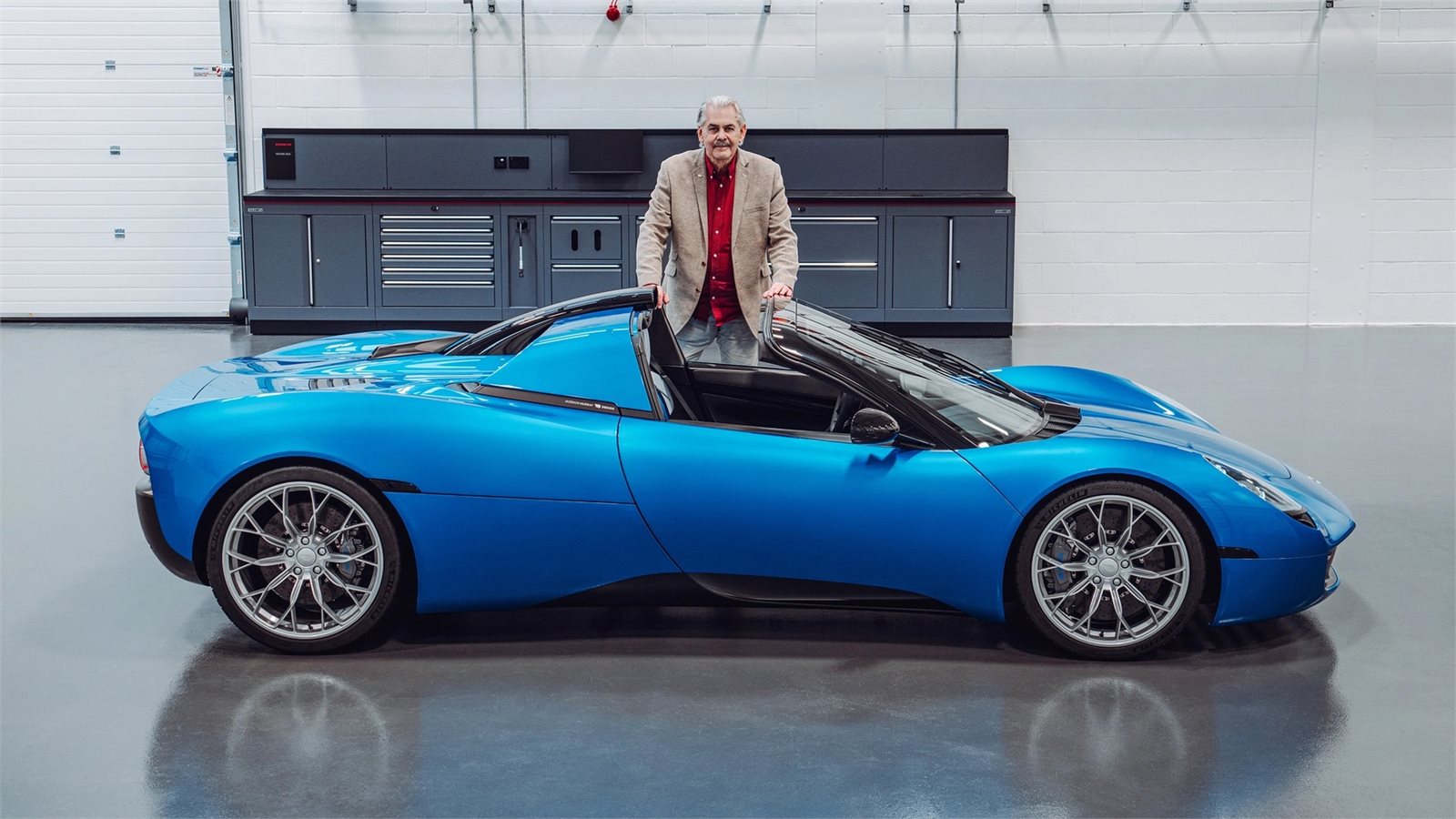 GMA T.33 Spider and Gordon Murray. Photo Credit: Top Gear, BBC
The new T.33 aims to distill the GMA experience into a slightly more relaxed, more accessible formula, trading the rear fan and center seat for usability, luggage space, and conventional doors. Just don’t let this fool you into thinking the T.33 has gone soft. While peak power and revs are down from the T.50 (to 11,100 rpm and 607 hp), the T.33 merely retunes the same Cosworth V12 for better road manners, allowing for 75% of the torque to be available at 2,500 rpm compared to the T.50’s far peakier unit. Power is sent to the rear wheels via the same X-trac 6-speed manual as the T.50, now the only transmission offered. GMA originally offered an IGS paddle-shift unit as an option, but later dropped the offering after less than 5% of customers requested it. That figure highlights exactly why a car like the T.33 exists: it’s the only car in its class with a manual transmission. It’s also alone in its class at under 3000 lbs, so despite being relatively down on power, the T.33 outranks nearly all of its competitors in power/weight.
Not that power is at all a focus in the T.33; It’s clear that Gordon Murray’s vision with GMA is to capture the most driver-focused, connected, and analogue driving experience possible. “Ordinary” supercars like the Temerario, 296 GTB, and 750s do offer more power and tech for the money, but also tack on up to 1500 lbs, forced induction, and automatic transmissions. Lamborghini, Ferrari, and McLaren all love to publish 0-60 times, max lateral G’s, and circuit times at their favorite test tracks. The T.33 does none of this, fitted with intentionally skinny Pilot Sport 4S’s for maximum steering feel and gearing that’s tuned for the road, not lap times. Everything in the T.33 is analogue when possible, from the rev counter, to the rotary switches on the dash, to the fixed dampers. The effect is a car that’s undoubtedly not as fast as it could be, but delivers all the sensory engagement it possibly can.
 GMA T.33 Spider Test Mule. Photo Credit: The Drive
The T.33 launches into a world with tough competition on all sides, and at a claimed starting price of $1.8 million, the T.33 has to answer a lot of questions. GM yuppies everywhere will be the first to ask why the T.33 should be worth sixteen times more than a C8 Z06, which claims to satisfy the same high-revving naturally-aspirated itch, to which the Z06’s auto-only transmission, four-fewer cylinders, and 2,500 fewer revs would provide a telling answer. A more cash-laden audience would ask why the T.33 should be compared to cars like the Aston Martin Valkyrie, which shares a similar Cosworth NA V12 but in a track-only shell, or a Chiron, buying you more than double the power, and nearly double the weight with it.
The fact is that the T.33 only has a few real competitors. A 911 S/T gets you most of the way there: 9,000 rpm N/A flat-six, manual only, lightweight, driver focused ethos, for only 1/6th of the price. But where the Porsche can match the T.33 in philosophy, it falls short in X-factor. An S/T might be able to keep up with a T.33 on paper, but sharing a chassis and nearly identical interior to a base Carrera drops it out of comparison almost completely on its own, and for many, bars the S/T from being considered a supercar at all. The T.33’s closest challenger may actually be the Pagani Utopia (see our article on it here): $2.2 million starting price, tiny production scale, less than 3000lbs, twin-turbo AMG V12, 7-speed manual option. The differences, though, are clear almost immediately. Torquey, turbocharged AMG engine versus high-revving, free-breathing Cosworth motor; hypercar-meets-artwork versus driver’s toy for the road; Italian theatrics versus English restraint: the contrast writes itself. Don’t forget, despite the Pagani’s similar lightweight obsession, the T.33 still weighs around 500 lbs less than the all-carbon Utopia. For the lucky customer that might be looking for an exciting, tactile, analogue supercar that’s usable every day, the T.33 stands nearly alone.
At $1.8 million, it might be a tough sell next to the world’s established hypercars, increasingly rapid supercars at fractions of the price, and new restomods every week, but the T.33’s true adversary isn't a car at all, rather it's a question: Is the last manual N/A V12 worth hypercar money? If your answer is yes, then we have some bad news for you. GMA has already sold all 100 T.33’s. As it turns out, many people would agree with you.