Pull up to any cars & coffee with a wealthy enough zip code and you may find a variety of modern supercars from all around the world. Everyone seems to have gotten in on the high-performance, high-dollar train: the Italians have been at it for decades, so have the Germans, the Brits, more recently the Americans & Japanese, and even the Swedes. For the better part of two decades, the English have been represented in part by the stylized red Kiwi adorning the front of some of the world’s finest supercars, with models like the 720s, P1, and Senna occupying a prized place in modern car culture.
So it’s hard to believe that McLaren, a dominant force in late ‘80s and early ‘90s Formula One and creators of the world's then-fastest production car in the form of the ’92 F1 road car, was seen as a newcomer to the road-legal automotive world in the early 2010s. But such was exactly the case upon release of the MP4-12c, their first entry into their Super Series, creating the foundational mid-engine, twin-turbo, RWD supercar layout that’s since defined their lineup.
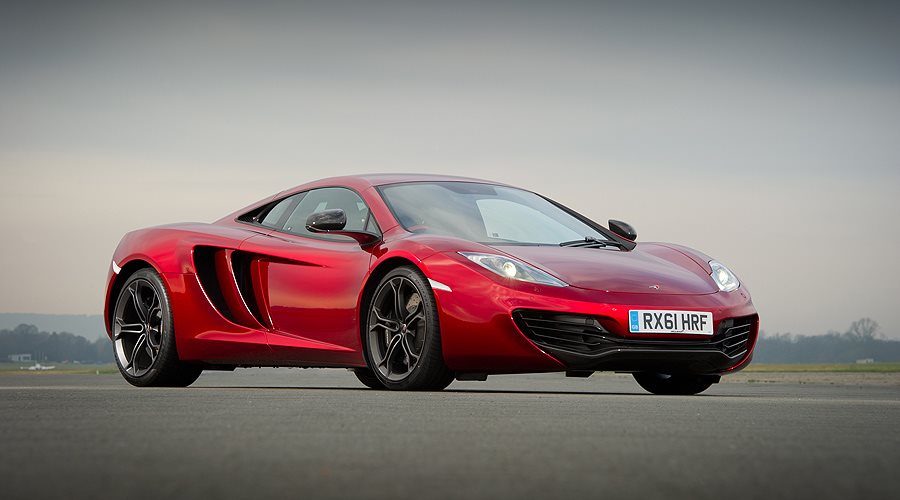
The 12c launched in 2011 after six years in development with a clear target in mind: to beat Ferrari at their own game. McLaren certainly had their work cut out for them; Ferrari’s offering at the time was the superb 458 Italia, a benchmark supercar now regarded as one of the greatest ever from Maranello and loved almost unanimously upon release. On the contrary, the 12c was received with notably less fanfare. Despite outperforming the 458 in most performance metrics and dripping with innovations like their independent hydraulic suspension, carbon fibre monocoque, and F1-derived brake-steering system, reviewers felt the 12c was too clinical and calculated. The 12c’s thorough competence became its biggest weakness; where the Italians offered design and flamboyance in spades through cars like the 458, Aventador, and Zonda, and the Germans with understated engineering discipline through the 911 and R8, the English marque was left without a clear road-going identity, initially failing to captivate an audience. It would take a few generations for McLaren to nail their formula and deliver supercars that matched their obsessive, engineering-first ethos to a road car that delivered the tactility and thrill drivers were looking for.
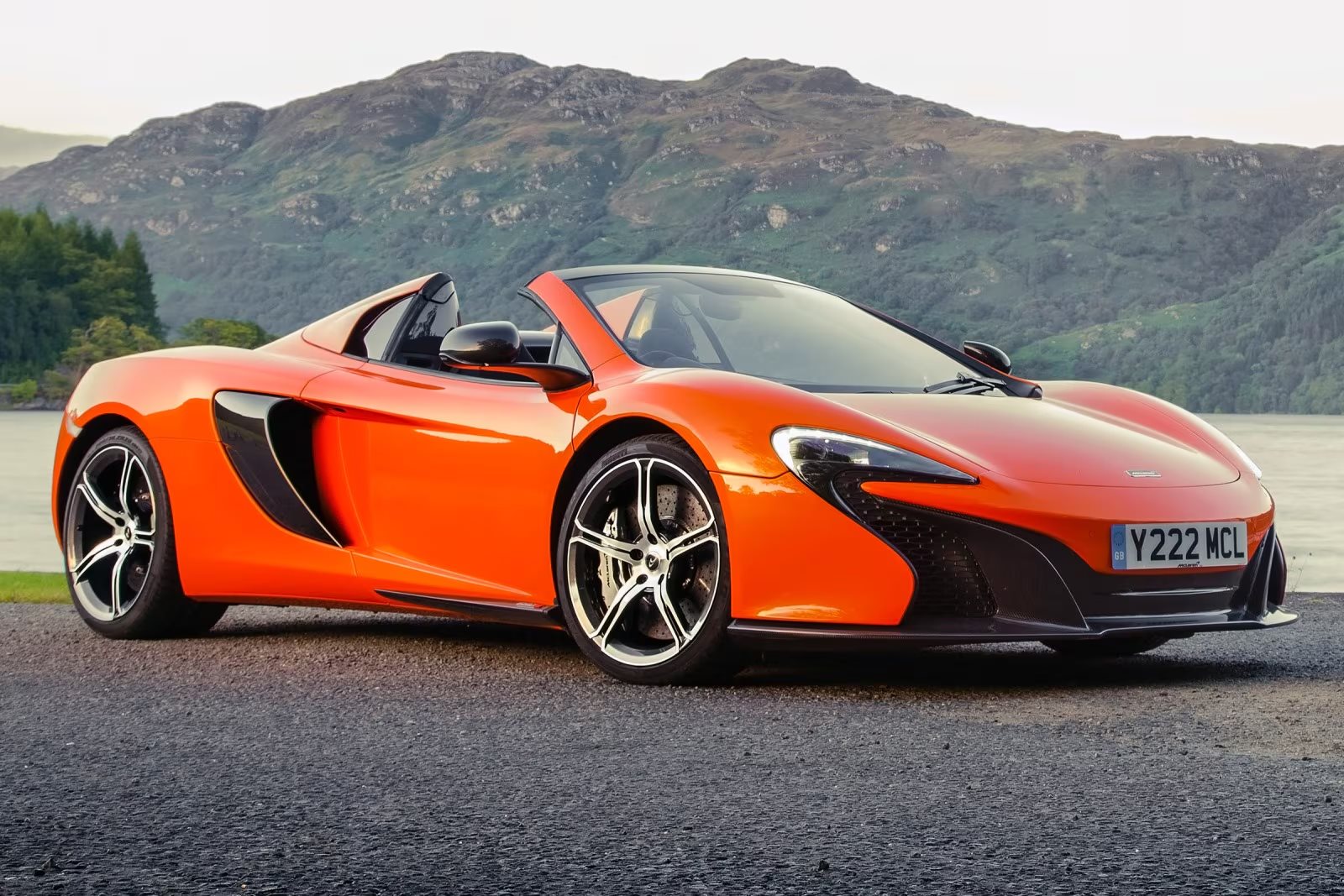
The 2014 650s served as a natural evolution of the 12c formula, despite not originally being conceived as its’ successor. Incorporating the learnings and design language from the previous year’s beloved P1 hypercar, nearly every aspect of the powertrain was re-engineered: power grew from 593 to 641, the redline increased to 8500rpm, and shift times from the 7 speed DCT decreased dramatically. Aero was also reworked, with a new nose and tweaked rear diffuser, and braking confidence issues were addressed with new pads, discs, and calipers on all four corners. These changes certainly improved acceleration and cornering, but more important were the changes McLaren made to the 650s’ feel and tactility. Stiffer suspension dramatically improved road feel both through the chassis, and sharper steering paired with a traction control system that allowed for more slip proved transformative to the 650s’ limit handling characteristics, introducing mid-corner adjustability and rear-end wiggle under throttle that turned the 12c’s technically competent but somewhat distant feeling handling into a significantly rawer and more communicative experience. Reviewers immediately took note, with Top Gear calling it “the car it should have been all along”.
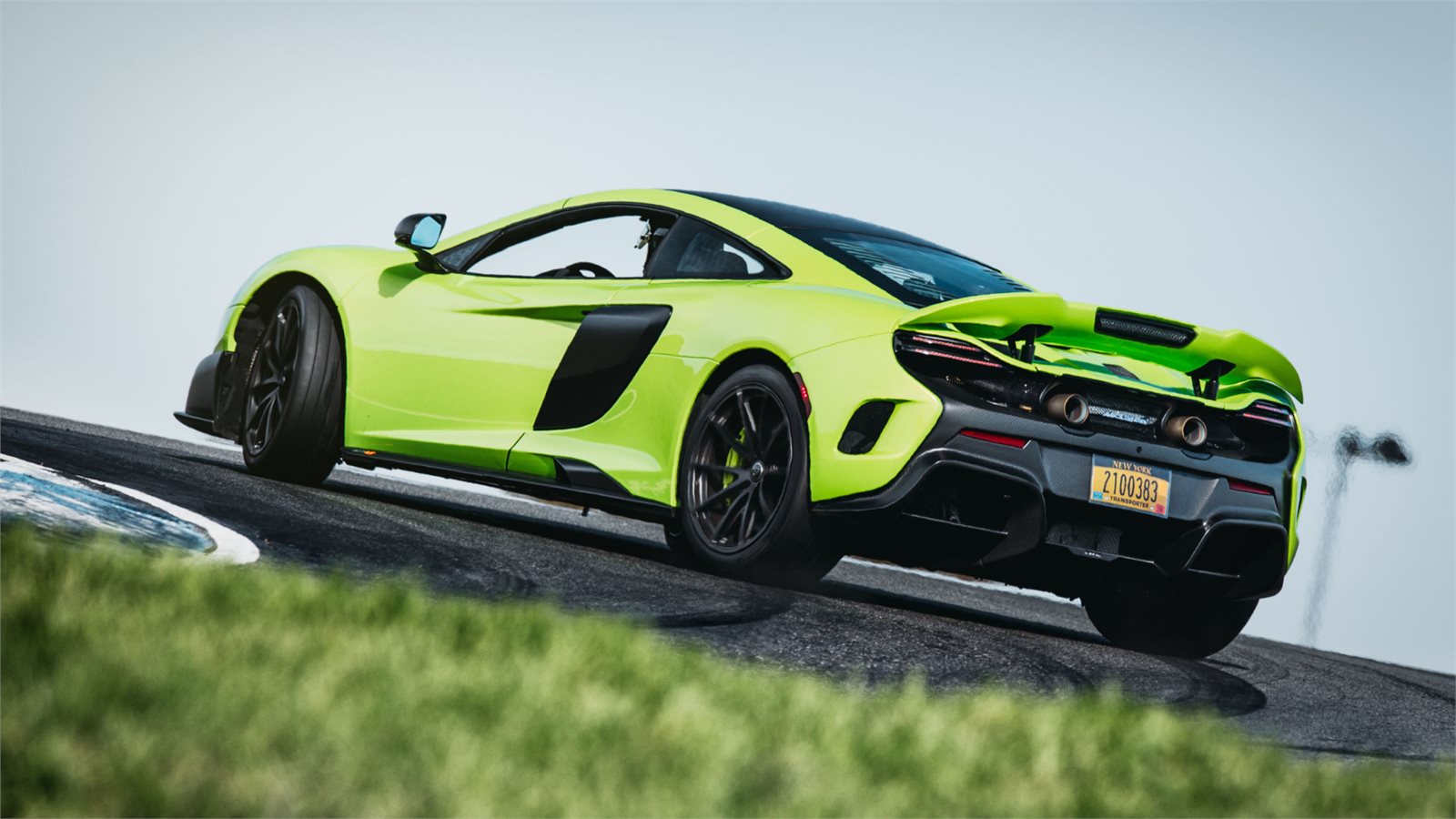
Only a year after the 650s’ launch, McLaren once again upped the ante in the form of the track-focused 675LT. Taking inspiration from the legendary racing-only F1 GTR Longtail, McLaren took the base 650s and added 1.3 inches to the rear end (hence the name), removed 220lbs, added 25 hp, and tuned every driving interaction for track use. Stiffer spring rates, a wider track, more aggressive camber in all four corners, and a steering rack faster than the P1’s sharpened the 675LT’s handling chops to create a true track weapon. McLaren continued injecting their Formula One learnings through aerodynamic changes as well, with an 80% larger splitter, 50% larger airbrake, and reworked floor to increase overall downforce by 40% over the 650s.
McLaren also addressed one of the 12c and 650s’ biggest shortcomings: the sound. The folks at Woking used several tricks to inject excitement into the V8’s otherwise flat aural signature. First, free-flowing cylinder heads and a brand-new, significantly lighter and less restrictive exhaust system was fitted to complement the 650s and 675LT’s higher redline. More notably, McLaren introduced “cylinder-cut” technology to cut fuel to specific cylinders during hard upshifts in Sport or Track mode, creating a dramatic “pop” on upshifts. With the 675LT, McLaren’s road-presence really started to catch up with their reputation in racing: whereas their clinically obsessive engineering approach initially worked against the MP4-12c’s reception, the Woking team clearly learned from those early reviews and re-focused their efforts towards engineering for feel and driving character instead of pure performance metrics. Not that their cars got any slower.
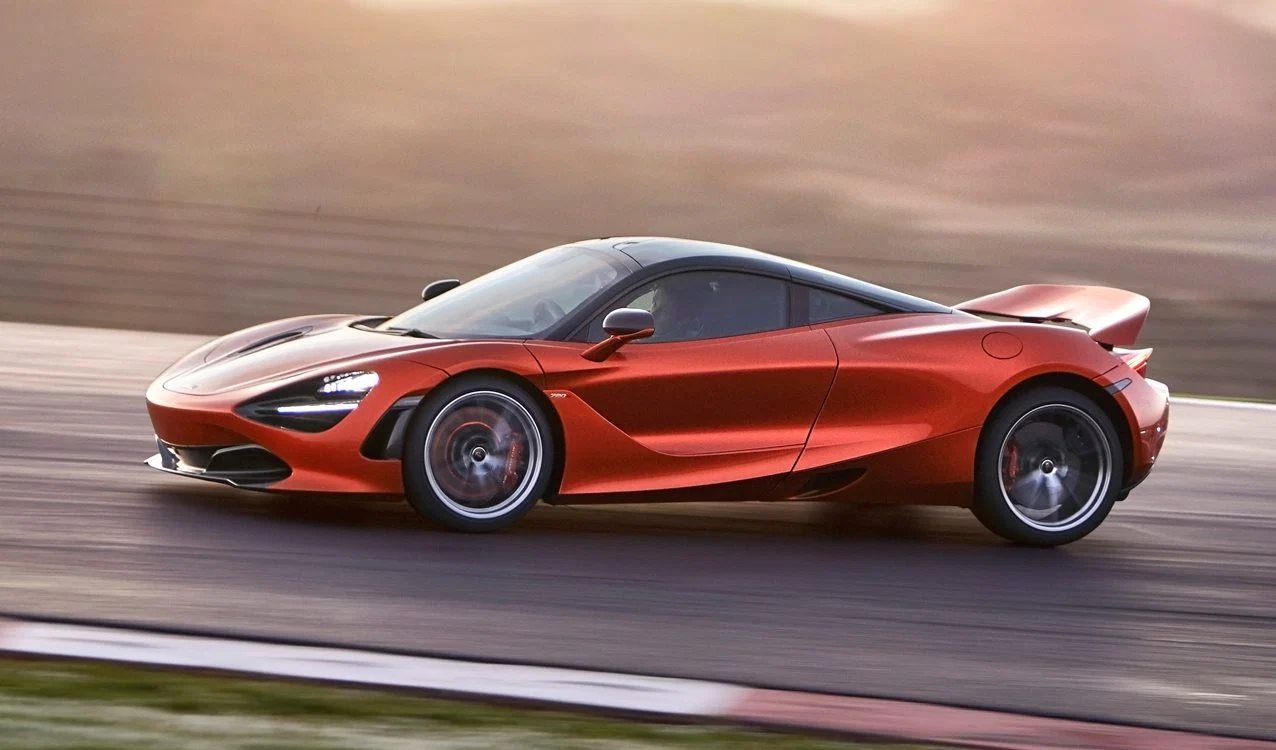
McLaren’s next effort, the 2017 720s, marked the first architectural clean-sheet design since the original 12c. Starting with a new tub called the Monocage II, helping the 720s lose 40lbs over the 650s, paired with a souped up version of the 650s’ V8 bored out to 4.0L adding 70hp in the process, the 720s’ acceleration started to knock on the door of barely-aging hypercars. Independent testing from outlets like MotorTrend placed the 720s’ quarter mile time at 10.1 seconds, crossing the line only three tenths behind the million-dollar P1 hypercar from only a few years prior. Suspension received an overhaul as well, with double wishbones and new uprights throughout, plus a revised Proactive Chassis Control II, not only improving body control and camber consistency under load, but also shedding roughly 35 lbs of unsprung mass. The 720s was such a significant step forward that, despite being a road-focused supercar, McLaren admitted the 720s laps most road courses quicker than the P1, to the likely dismay of P1 owners everywhere. Reviewers loved the 720s’ pairing of brutal, unrelenting acceleration with a communicative and precise, yet compliant chassis. Car and Driver called it “a Hellcat as realized by a Formula 1 team”.
With all their technical advancements though, perhaps the 720s’ greatest achievement was finally stepping from a car that impresses on road and track, to a car you truly want in your garage. This effect comes courtesy of the design team, with elements carried over from earlier cars like the between-taillight exhaust exits and open engine bay mesh, but still looking forward with a brand new side profile and front facia with Senna-like headlight inserts. Past McLaren’s were undeniably cool-looking, that much goes without saying, but you’d be hard-pressed to call them pretty. The same can’t be said about the 720s, which executes the same form-follows-function aerodynamic approach with far more visual sauce. Gone are the large and slightly overused side intake vents (see R8, 911 Turbo, and any mid-engine Ferrari or Lambo) in favor of sweeping creases and curves that accentuate the rear haunches to an almost cartoonish level. Such is exactly the point of a supercar: technical prowess must be met with matching charisma and appeal. Every vent, channel, and curve on the 720s serves a purpose, yet the culmination of these elements reveals a shape not only distinct to McLaren, but also truly desirable.
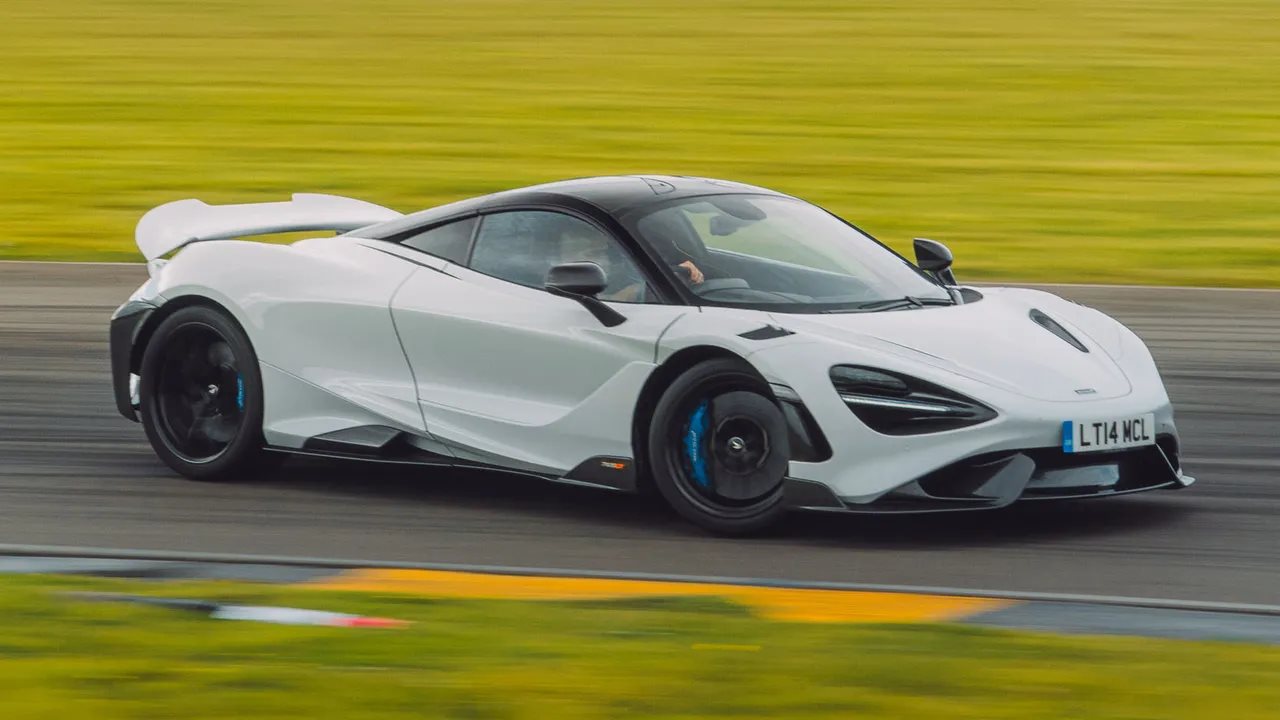
Just as the previous gen’s 675LT did with the 650s, the 2020 765LT injected the base 720s with all the track-focused goodies an off-duty racing driver could possibly want. Power was once again increased to 755 hp, which paired with the shortened final drive ratio produced even faster quarter mile times (DragTimes recorded times as low as 9.3 seconds on a prepped surface). In its lightest configuration, with roughly three Miata’s worth of carbon fibre and Senna-derived brakes & bucket seats, the 765LT weighs in at just 2950 lbs, nearly 200 lbs less than the already lightweight 720s. Further pursuing lap time reductions, the 765LT follows in its predecessors footsteps in adding functional aero throughout the body, producing 25% more downforce than the 720s.
McLaren’s intent with the LT models at this point rings clear: sacrifice daily usability and road compliance in the name of pure sensory feedback, immediacy, and track capability. This philosophy is present throughout, with less sound deadening in the floor and windows, significantly stiffer suspension and torsion bars, quicker steering, and stickier, more temperature sensitive tires. Despite all this, and as with the rest of the modern LT lineage, the 765LT is a driver’s car first and a track car second. Around tracks like Hockenheim and the Nurburgring, the McLaren trades blows with the likes of the 488 Pista, Porsche GT2 RS, and Aventador SVJ, but remains in a league above when it comes to steering feel, chassis balance, and pure communication. A notable trait that helps McLaren hold this title over such fierce competition is their commitment to using hydraulic-interfacing steering racks. While the majority of the auto industry has moved to electric powered steering, hydraulic (or electro-hydraulic in their case) has a much higher ceiling of road texture and fine detail through the wheel, becoming a hallmark trait of McLarens. Despite the added complexity, weight, and incompatibility with driver-assist features, McLaren’s belief that purely electrical powered steering dampens road information is what keeps hydraulic steering racks in their cars.
While McLaren’s Super Series is yet to receive a true successor, outside of 720s updates like the 750s and 788HS, the Woking team has clearly been hard at work bringing the brand into the current era of hybridization and hyper-advanced drive systems, with models like the Artura and W1 maintaining the same analog, communicative feel of earlier cars despite mountains of added complexity. Regardless of if the next Super Series entry drops cylinders and adds hybridization, we can remain confident that McLaren’s driver-centric reputation will yield another benchmark in the supercar world.